
O-Rings


Precision-Engineered O-Rings
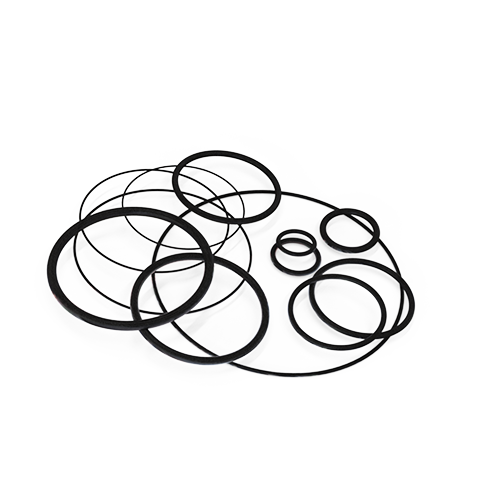
Custom and standard O-rings manufactured to industry specifications (AS568) for reliable sealing in automotive, industrial, and commercial applications. Every O-ring undergoes 100% visual inspection to ensure dimensional accuracy and material integrity.
Material Options
- Silicone: Excellent temperature resistance and flexibility for general-purpose sealing
- Fluorosilicone: Superior fuel and oil resistance combined with low-temperature performance
- Viton (FKM): Outstanding chemical resistance and high-temperature capability for demanding environments
- EPDM, Nitrile, Neoprene and more: Additional compounds available for specific application requirements
Manufacturing Standards
All O-rings are produced in accordance with AS568 dimensional standards, ensuring consistent sizing and compatibility with standard gland designs. Custom sizes and compounds available for OEM specifications.
Quality Assurance
100% visual inspection of every O-ring for dimensional accuracy, surface finish, and material defects. Lot traceability and material certifications available upon request.
Applications
Ideal for hydraulic systems, pneumatic assemblies, automotive sealing, fluid handling equipment, and custom machinery requiring reliable static or dynamic sealing.
Custom Solutions
Our in-house molding and compounding capabilities enable custom O-ring production for unique sizes, materials, or performance requirements. Contact us for technical consultation and quotations.


Need a custom quote?
Don't hesitate and reach us! Our customer service team would be happy to assist you.
1000+ Products Produced
Learn more about our customer manufactured rubber products, we can do it all!
-
Boots/Bellows
Regular price $0.00Regular priceUnit price per -
Bump Stops
Regular price $0.00Regular priceUnit price per -
Charge air cooler hose with Stainless steel rings
Regular price $0.00Regular priceUnit price per -
FKM lined silicone hoses
Regular price $0.00Regular priceUnit price per -
FVMQ lined silicone hoses
Regular price $0.00Regular priceUnit price per -
Custom Window Trim Seals - Silicone & EPDM Rubber Gaskets
Regular price $0.00Regular priceUnit price per -
Molded Crumb Rubber Parts
Regular price $0.00Regular priceUnit price per -
Fabric reinforced silicone drain tube/hose
Regular price $0.00Regular priceUnit price per -
NBR/Nitrile Bumper for Light Switches
Regular price $0.00Regular priceUnit price per -
Neoprene Sleeves/Grommets/Couplers
Regular price $0.00Regular priceUnit price per -
Cab Chassis Mounts/Isolators
Regular price $0.00Regular priceUnit price per -
Silicone + Fiberglass Tubing in UL Certified Couplings
Regular price $0.00Regular priceUnit price per -
Engine Mounts
Regular price $0.00Regular priceUnit price per -
Heater Hose (SAE J20)
Regular price $0.00Regular priceUnit price per -
Coolant Hose
Regular price $0.00Regular priceUnit price per -
Electrical Connector Grommet
Regular price $0.00Regular priceUnit price per -
Spark Plug Boot
Regular price $0.00Regular priceUnit price per -
EGR Silicone Hoses
Regular price $0.00Regular priceUnit price per -
Silicone Perimeter Seals for Electrical Connectors
Regular price $0.00Regular priceUnit price per -
Silicone Wire Seals
Regular price $0.00Regular priceUnit price per


More questions?
You might be interested
-

How Custom Window Seals Are Made: Extrusion vs....
Custom window seals can be manufactured through rubber extrusion or compression molding, depending on their geometry. Extrusion is generally suited to continuous profiles with a consistent cross-section, while compression molding...
How Custom Window Seals Are Made: Extrusion vs....
Custom window seals can be manufactured through rubber extrusion or compression molding, depending on their geometry. Extrusion is generally suited to continuous profiles with a consistent cross-section, while compression molding...
-

How to Design Parts for Rubber Compression Molding
Why Part Design Matters in Rubber Compression Molding In industrial manufacturing, the long-term performance and unit cost of a component are established long before the first production cycle begins. When...
How to Design Parts for Rubber Compression Molding
Why Part Design Matters in Rubber Compression Molding In industrial manufacturing, the long-term performance and unit cost of a component are established long before the first production cycle begins. When...
-

Polyurethane vs Rubber Molding: Process, Benefi...
In many industrial applications, the choice of material can be as important as the design itself. Polyurethane and rubber offer distinct properties that directly impact product performance, longevity, and overall...
Polyurethane vs Rubber Molding: Process, Benefi...
In many industrial applications, the choice of material can be as important as the design itself. Polyurethane and rubber offer distinct properties that directly impact product performance, longevity, and overall...
-

Rubber Extrusion vs Compression Molding: Key Di...
Selecting the right production method for industrial components is a critical decision that impacts every stage of a product's lifecycle. In the world of rubber manufacturing, two processes dominate the...
Rubber Extrusion vs Compression Molding: Key Di...
Selecting the right production method for industrial components is a critical decision that impacts every stage of a product's lifecycle. In the world of rubber manufacturing, two processes dominate the...
-

Dimensional Inspection Challenges in Custom Mol...
For OEM engineers and technical buyers, dimensional inspection is often treated as a straightforward quality step: compare a part against the drawing and confirm it is within tolerance. In practice,...
Dimensional Inspection Challenges in Custom Mol...
For OEM engineers and technical buyers, dimensional inspection is often treated as a straightforward quality step: compare a part against the drawing and confirm it is within tolerance. In practice,...
-

Custom Rubber Molding Services: A Capabilities ...
Navigating the landscape of rubber manufacturing can be complex. Choosing the right process—whether it be compression molding, transfer molding, or injection molding—is vital for balancing cost, quality, and production speed.
Custom Rubber Molding Services: A Capabilities ...
Navigating the landscape of rubber manufacturing can be complex. Choosing the right process—whether it be compression molding, transfer molding, or injection molding—is vital for balancing cost, quality, and production speed.
-

Compression Molding Companies: When This Proces...
In the complex landscape of industrial production, selecting the right fabrication method for rubber components is a critical decision that impacts product performance, durability, and total cost of ownership. While...
Compression Molding Companies: When This Proces...
In the complex landscape of industrial production, selecting the right fabrication method for rubber components is a critical decision that impacts product performance, durability, and total cost of ownership. While...
-

Custom molded rubber parts for industrial appli...
In the complex landscape of modern manufacturing, the success of a massive piece of machinery often depends on its smallest components. Among these, custom molded rubber parts serve as the...
Custom molded rubber parts for industrial appli...
In the complex landscape of modern manufacturing, the success of a massive piece of machinery often depends on its smallest components. Among these, custom molded rubber parts serve as the...
-

Injection Molding vs Compression Molding: How Y...
When OEM buyers and product engineers evaluate rubber components, one of the most common early-stage questions is: Should this part be produced using injection molding or compression molding? Choosing the...
Injection Molding vs Compression Molding: How Y...
When OEM buyers and product engineers evaluate rubber components, one of the most common early-stage questions is: Should this part be produced using injection molding or compression molding? Choosing the...
-

Scrap Reduction Strategies in Rubber Molding: A...
Scrap reduction is one of the most persistent challenges in rubber molding. For manufacturing engineers and product designers, scrap is more than a cost issue—it directly impacts process stability, quality...
Scrap Reduction Strategies in Rubber Molding: A...
Scrap reduction is one of the most persistent challenges in rubber molding. For manufacturing engineers and product designers, scrap is more than a cost issue—it directly impacts process stability, quality...
-

Rubber Molding Processes: Compression, Transfer...
Rubber manufacturing offers several molding processes designed to meet the technical, geometric, and production requirements of each application. Choosing the right molding method not only affects part performance, but also...
Rubber Molding Processes: Compression, Transfer...
Rubber manufacturing offers several molding processes designed to meet the technical, geometric, and production requirements of each application. Choosing the right molding method not only affects part performance, but also...


